What are the different materials used for interior design?
Staring at a blank room or a fresh set of renovation blueprints can feel incredibly overwhelming when you don’t know where to start with your finishes. You know what you want the space to look like, but translating that vision into a tangible reality requires making countless choices about flooring, countertops, and textiles.
Choosing the wrong materials doesn’t just result in a disjointed aesthetic, it can completely derail your budget and disrupt your daily life. A gorgeous, porous marble countertop can quickly become a nightmare if your family constantly spills acidic foods, while cheap synthetic flooring might wear out in high-traffic areas or even off-gas unwanted chemicals into your home.
The secret to a flawless, long-lasting space is understanding the fundamental building blocks of design. Whether you are designing your forever home or working with a Creative Property Stylist in Sydney to maximise your market appeal, mastering these core categories allows you to confidently select finishes that balance durability, budget, and breathtaking aesthetics.
Tl;DR: What materials are used in interior design?
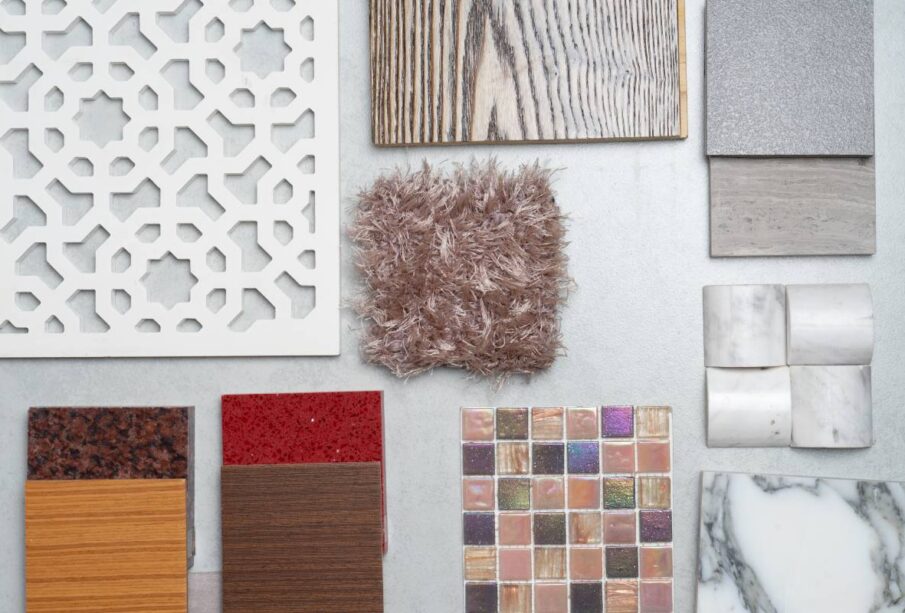
To build a cohesive and highly functional space, designers pull from seven primary categories of materials. Here is a quick overview of the different materials used for interior design:
- Natural Woods: Solid hardwoods, reclaimed timber, and engineered wood.
- Natural Stone: Marble, granite, travertine, slate, and quartz.
- Metals: Stainless steel, brass, copper, and aluminium.
- Glass: Architectural glass, tempered glass, and recycled glass.
- Textiles and Fabrics: Linen, wool, velvet, cotton, and bouclé.
- Synthetics and Composites: Luxury Vinyl Tile (LVT), laminates, and acrylics.
- Sustainable & Biophilic Materials: Cork, bamboo, and mycelium.
1. Natural Wood: Timeless Warmth and Versatility
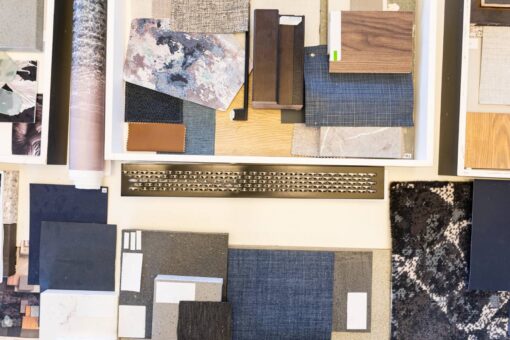
Wood is arguably the most foundational material in interior design, celebrated for its ability to inject immediate warmth and organic texture into any room. From structural ceiling beams to intricate custom joinery, wood bridges the gap between the natural outdoors and the cozy indoors.
Different species of wood offer drastically different visual and functional properties for your home. Oak and walnut are highly prized hardwoods known for their incredible durability and rich, deep grain patterns, making them ideal for high-traffic flooring and heirloom furniture.
On the other hand, softer woods like pine are cost-effective but prone to dents and scratches. Today, engineered wood and reclaimed timber are dominating modern design because they offer the aesthetic of solid wood with enhanced environmental sustainability and resistance to warping.
- Best Application: Flooring, custom cabinetry, wall panelling, and statement furniture.
- Pros: Naturally beautiful, highly durable, and easily refinished or repurposed over time.
- Cons: Can be susceptible to moisture damage, termites, and scratching if not properly sealed.
2. Natural Stone: The Epitome of Luxury
Nothing communicates luxury, permanence, and sophisticated taste quite like natural stone. Because stone is pulled directly from the earth, every single slab features unique veining and mineral deposits, ensuring that your installation is entirely one-of-a-kind.
Granite is a traditional favourite for kitchens because of its dense, heat-resistant, and scratch-proof nature. However, marble and travertine are currently leading the trends, prized for their dramatic, bold veining and elegant, tactile surfaces that instantly elevate a bathroom or kitchen island.
When using stone, it is vital to understand its porosity and maintenance requirements. While visually stunning, marble is highly porous and will stain if exposed to wine or citrus, meaning it requires regular chemical sealing to maintain its pristine appearance.
- Best Application: Kitchen countertops, bathroom vanities, fireplace surrounds, and statement flooring.
- Pros: Unmatched elegance, incredibly heat resistant, and highly durable under physical impact.
- Cons: Often the most expensive material choice, heavy to install, and requires ongoing maintenance.
3. Metals: Industrial Edge and Modern Glamour
Metals are the jewellery of an interior space, providing essential contrast to softer materials like wood and fabric. They are utilised in everything from heavy architectural frameworks to the delicate hardware on your kitchen cabinets.
Metals are generally categorised into “warm” and “cool” tones, each evoking a different psychological response. Cool metals like stainless steel, chrome, and aluminium create a sleek, modern, and clinical feel, making them staples in contemporary and industrial designs.
Conversely, warm metals like unlacquered brass, copper, and bronze add instant character and vintage charm. These living finishes are highly sought after because they develop a rich, natural patina over time, recording the history of the home’s usage.
- Best Application: Lighting fixtures, plumbing hardware, stair railings, and furniture framing.
- Pros: Exceptionally strong, easy to sanitise, and available in endless finishes.
- Cons: Can feel cold or sterile if overused, and certain finishes tarnish easily.
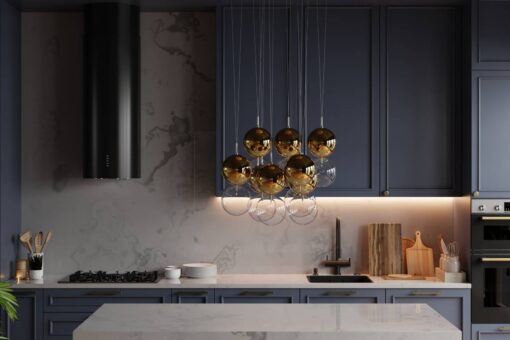
4. Glass and Reflective Surfaces: Maximising Light
Glass is a magical material in the designer’s toolkit, used primarily to manipulate light and the perception of space. By allowing natural sunlight to flow uninterrupted, glass prevents a room from feeling boxed in or claustrophobic. To maximise this airy effect, it is crucial to understand your home’s structural proportions, such as the standard ceiling height, to ensure your glass installations and mirrors scale perfectly with the room.
Beyond standard windows, glass is heavily utilised in interior partitions, shower enclosures, and modern staircases. Textured and fluted glass are currently experiencing a massive revival, offering a brilliant way to maintain privacy while still allowing ambient light to pass through.
Sustainability has also entered the glass market in a big way. Recycled glass is now frequently crushed and bound into stunning, eco-friendly terrazzo countertops and backsplashes, diverting tons of waste from local landfills.
- Best Application: Windows, room dividers, mirrors, coffee tables, and shower doors.
- Pros: Creates the illusion of more space, is easily cleaned, and 100% recyclable.
- Cons: Highly fragile, requires frequent cleaning to remove fingerprints, and offers poor insulation.
5. Textiles and Fabrics: Softening the Space
A room designed solely with hard surfaces will feel cold, echoey, and uninviting. Textiles are the critical softening agent in interior design, introducing necessary colour, pattern, acoustic dampening, and tactile comfort.
When selecting fabrics, durability is just as important as aesthetics. Always check a fabric’s “Double Rub” rating; materials intended for heavy daily use (like a family room sofa) should withstand at least 15,000 to 30,000 double rubs to prevent premature tearing.
Natural fibres like linen and cotton offer a breathable, relaxed, and organic aesthetic, though they can wrinkle easily. For spaces demanding grandeur and rich sensory experiences, heavy textiles like velvet, wool, and textured bouclé are unmatched in their cozy appeal.
- Best Application: Upholstery, window drapery, area rugs, and throw cushions.
- Pros: Endless customisation, excellent sound absorption, and easy to swap out as trends change.
- Cons: Can harbour dust and allergens, prone to sun fading, and susceptible to liquid stains.
6. Synthetics and Composites: Budget-Friendly Durability
Not every project has the budget for authentic marble or solid oak, which is where high-quality synthetics and composites shine. Modern manufacturing has advanced so significantly that these materials often perfectly mimic their natural counterparts.
Luxury Vinyl Tile (LVT) is a revolution in flooring, offering the precise look of hardwood or stone but with complete water resistance and a fraction of the cost. This makes it the ultimate choice for wet areas like bathrooms, basements, and laundry rooms.
Similarly, acrylics and high-pressure laminates provide durable, easy-to-clean surfaces for modern cabinetry and countertops. While they may lack the unique “soul” of natural materials, their cost-effectiveness and zero-maintenance appeal make them incredibly popular.
- Best Application: High-traffic flooring, budget-friendly countertops, and commercial spaces.
- Pros: Highly affordable, incredibly scratch and water-resistant, and virtually maintenance-free.
- Cons: Difficult to repair if deeply gouged, shorter lifespan than natural materials, and potential for VOC off-gassing.
7. Sustainable and Biophilic Materials: The Future of Design
As environmental consciousness grows, the interior design industry is pivoting aggressively toward renewable, low-impact materials. This is heavily tied to “Biophilic Design,” a concept focused on deeply connecting building occupants to the natural world.
Cork and Bamboo are leading the sustainable charge. Bamboo grows to maturity in just five years (compared to decades for oak), while cork is harvested from the bark of living trees without cutting them down, offering incredible acoustic and thermal insulation.
Cutting-edge innovations are also introducing materials like Mycelium (the root structure of mushrooms) into the home. This rapidly renewable, fully biodegradable organism is being grown in moulds to create eco-friendly acoustic panels, lighting fixtures, and even alternative leather upholstery.
- Best Application: Eco-conscious flooring, soundproofing, and statement architectural features.
- Pros: Extremely low carbon footprint, biodegradable, and unique organic textures.
- Cons: Can be difficult to source locally and may carry a higher upfront premium.
Interior Design Material Comparison Table
To help you make the best decision for your upcoming project, here is a quick reference guide comparing the durability, cost, and best use cases for top interior design materials.
| Material Category | Average Cost | Durability Rating | Maintenance Level | Ideal Room Application |
| Solid Hardwood | $$$ | High | Medium (Needs refinishing) | Living Rooms, Bedrooms |
| Natural Stone | Very High | High (Needs sealing) | Kitchens, Master Baths | |
| Metals (Brass/Steel) | $$-$$
$ |
Extreme | Low to Medium | Hardware, Lighting |
| Luxury Vinyl (LVT) | $$ | High | Very Low | Basements, Bathrooms |
| Linen / Cotton | $$ | Moderate | Medium (Stain prone) | Low-Traffic Upholstery |
| Cork / Bamboo | $$ | Moderate | Low | Home Offices, Playrooms |
Conclusion: Crafting Your Perfect Space
Understanding the diverse range of materials used for interior design is the crucial first step in transforming a house into a functional, breathtaking home. From the grounding warmth of natural wood and the luxurious permanence of stone, to the budget-friendly resilience of synthetic composites, every material serves a distinct functional and emotional purpose.
The most successful spaces do not rely on just one category. Instead, they masterfully layer these elements, pairing cold, sleek metals with warm, textured textiles, to create an environment that is balanced, dynamic, and perfectly suited to your daily lifestyle.
Now that you understand the building blocks of design, ask yourself this:If you had to choose just three materials to define the entire aesthetic of your home for the next twenty years, what would they be, and what story do you want them to tell?