Water-Damaged Walls and Ceilings: When to Repair and When to Replace
Water damage is one of the most common problems homeowners face. Whether caused by a leaking roof, burst pipe, overflowing bathroom, or heavy storms, water can quickly damage walls and ceilings. What might start as a small stain can turn into serious structural issues if left untreated.
The challenge many homeowners face is deciding whether the damage can be repaired or if the wall or ceiling needs to be replaced entirely. Repairing minor damage can save money, but in some cases, replacement is the safer and more long-term solution.
In this guide, we’ll explain the causes of water-damaged walls and ceilings, the warning signs to look for, and how to determine when a repair will work — and when replacement is the better option.
Common Causes of Water Damage in Walls and Ceilings
Before deciding how to fix water damage, it’s important to understand where the water came from. If the source isn’t fixed, the problem will simply return.
Some of the most common causes include:
Roof Leaks
Damaged or missing roof tiles can allow rainwater to seep into the ceiling cavity. Over time, water can soak insulation, plasterboard, and timber framing.
Plumbing Leaks
Burst pipes, leaking taps, and faulty plumbing inside walls can slowly release water, causing damage that may not be noticed until it becomes severe.
Bathroom and Shower Leaks
Bathrooms are a common source of hidden water damage. Poor waterproofing or cracked tiles can allow moisture to leak into surrounding walls.
Storm or Flood Damage
Heavy storms can overwhelm drainage systems or cause roof leaks, allowing water to enter the home and damage ceilings and walls.
Condensation and Moisture Build-Up
Poor ventilation in kitchens, bathrooms, or laundry areas can lead to moisture accumulation, eventually damaging plaster surfaces.
Identifying the source of water damage is the first and most important step before any repair work begins.
Signs of Water-Damaged Walls and Ceilings
Water damage isn’t always immediately obvious. Sometimes the signs appear slowly over time.
Here are some common indicators that your wall or ceiling has been affected by moisture.
Water Stains and Discolouration
Brown, yellow, or dark patches on ceilings and walls are one of the clearest signs of water intrusion. These stains usually indicate that water has seeped into the plasterboard.
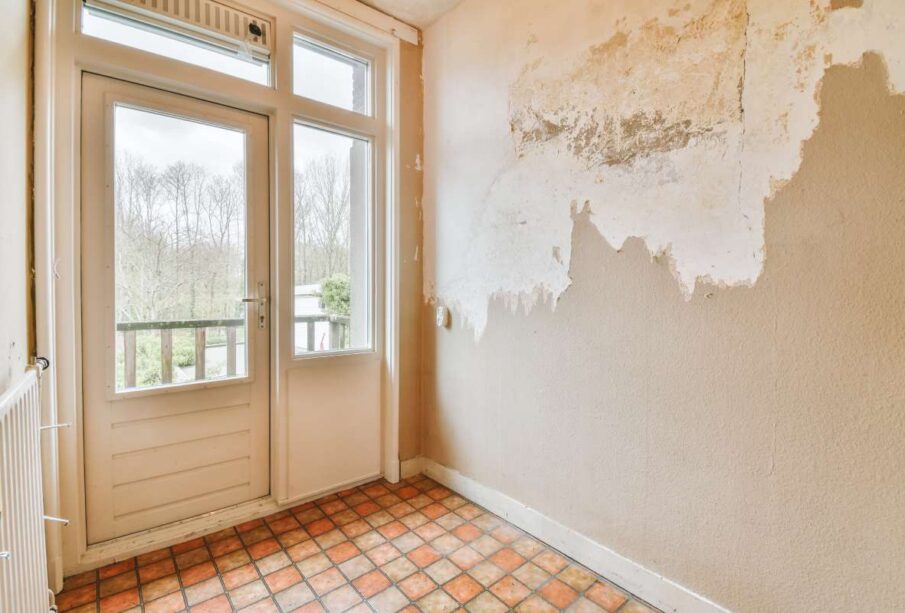
Peeling or Bubbling Paint
When moisture builds up behind paint, it causes the surface to bubble, blister, or peel away.
Sagging Ceilings
A sagging ceiling is a serious warning sign. Plasterboard absorbs water and becomes heavy, which can cause it to droop or even collapse.
Cracks or Soft Spots
Water can weaken plaster and drywall. If a wall feels soft when pressed, or cracks start appearing, the material may have been compromised.
Mould or Musty Smell
Moisture creates the perfect environment for mould growth. A musty smell or visible mould spots can indicate hidden water damage inside the wall or ceiling.
If any of these signs appear, it’s important to investigate the cause as soon as possible.
When Water-Damaged Walls Can Be Repaired
In many cases, water damage can be repaired without replacing the entire wall or ceiling.
Repair is usually possible when the damage is minor and the structure is still sound.
Minor Water Stains
Small stains caused by a temporary leak can often be fixed by:
- drying the affected area
- sealing the stain
- repainting the surface
As long as the plasterboard has not been weakened, this is usually a simple repair.
Surface-Level Damage
If water has only affected the paint or outer plaster layer, professionals can often:
- sand the damaged surface
- apply a new skim coat of plaster
- repaint the area
This restores the wall without needing full replacement.
Small Areas of Damage
If the water damage is limited to a small section of plasterboard, the damaged area can often be cut out and replaced with a patch.
Professional plasterers can blend the patch into the surrounding surface so it becomes almost invisible after painting.
When Replacement Is the Better Option
While repairs are sometimes possible, there are situations where replacement is the safer and more effective solution.
Severe Water Saturation
When plasterboard becomes heavily soaked, it loses its strength. Even after drying, it may remain weak and prone to cracking.
In these cases, replacing the damaged section is the best option.
Sagging or Collapsing Ceilings
If a ceiling has started sagging, it usually means the plasterboard has absorbed too much water.
A sagging ceiling can become dangerous and may collapse unexpectedly. Replacement is usually required to restore structural safety.
Mould Contamination
If mould has developed inside the wall or ceiling cavity, simply covering the area will not solve the problem.
The affected materials may need to be removed so the area can be properly cleaned and dried.
Repeated Water Damage
If the same wall or ceiling has been damaged multiple times, the structure may already be weakened. Replacement helps ensure the problem does not continue.
Structural Damage
If water has affected structural components such as timber framing, the repair process may require removing the wall or ceiling to access and repair the framework.
Why You Should Never Ignore Water Damage
Many homeowners delay repairs because the damage seems minor. Unfortunately, water damage rarely improves on its own.
Ignoring the problem can lead to:
- mould growth
- structural damage
- electrical hazards
- costly repairs later
Moisture trapped inside walls can also attract pests and weaken building materials over time.
The sooner the damage is assessed and repaired, the easier and more affordable the solution will be.
The Water Damage Repair Process
Professional plasterers typically follow several steps when repairing water-damaged walls or ceilings.
1. Identify and Fix the Water Source
Before repairing anything, the cause of the leak must be fixed. Otherwise, the damage will return.
2. Dry the Area
The affected area must be completely dried. This may involve ventilation, dehumidifiers, or removing wet insulation.
3. Assess the Structural Damage
The plasterboard and supporting structure are inspected to determine whether repair or replacement is necessary.
4. Repair or Replace the Damaged Material
Depending on the extent of the damage, professionals may:
- patch damaged sections
- apply new plaster
- replace entire panels of plasterboard
5. Sand, Prime, and Repaint
The final stage restores the wall or ceiling to its original appearance.
A properly repaired surface should blend seamlessly with the surrounding area.
How to Prevent Future Water Damage
While not all water damage can be avoided, homeowners can reduce the risk by taking preventative measures.
Some helpful steps include:
- regularly inspecting the roof for leaks
- checking plumbing for signs of moisture
- ensuring bathrooms are properly waterproofed
- improving ventilation in kitchens and bathrooms
- cleaning gutters and downpipes
Routine maintenance can prevent small issues from turning into expensive repairs.
Repair vs Replacement: A Quick Summary
When deciding how to deal with water-damaged walls or ceilings, the key factor is how deeply the water has affected the material.
Repairs are usually suitable when:
- damage is minor
- plasterboard remains solid
- mould is not present
- the leak was temporary
Replacement is usually necessary when:
- plasterboard is saturated
- ceilings are sagging
- mould is widespread
- structural damage has occurred
A professional assessment can help determine the safest and most cost-effective option.
Choosing the Right Professionals for Water-Damaged Walls and Ceilings
Water damage repairs require more than just cosmetic fixes. Proper assessment, drying, and plaster restoration are essential to ensure the problem does not return.
Working with experienced plastering professionals ensures the job is done correctly and safely.
For homeowners in New South Wales, Pro Plaster N Paint is a trusted choice for repairing and restoring water-damaged walls and ceilings. With extensive experience in plaster repairs, ceiling restoration, and repainting, their team can assess the extent of the damage and recommend whether repair or replacement is the best solution.
By addressing the issue properly and using skilled professionals, you can restore your walls and ceilings to their original condition and protect your home from future damage.